WE HAVE MOVED!

If you would like to continue getting great fitness information, please visit our website to see the new blog. You can also sign up for the newsletter to be reminded when our new blog posts come out!

Friday, September 14, 2012

Breathing Your Way Out of Back Pain


I want you to stop whatever you are doing and think about what your body is doing right now. Are you standing, sitting, or lying down? Is your back straight or hunched over? Do you have pain anywhere? Where are your shoulders? Are they up around your ears from stress, or are they relaxed? Finally, how are you breathing? Are you taking long slow belly breaths or are they short and up in your chest. Do you feel your shoulders move up and down every time you breathe?

If you are like most people, you probably just corrected about 10 things you noticed were not optimal for your posture or your functioning. The scary thing is, if you had not just thought through that, how many more hours would you have been stuck in that position before you finally moved? It has been shown that keeping a static posture for just 20 minutes can take up to 60 minutes of motion to “undo” the postural changes you have created. This means that if you sit at a desk for 2 hours then stand up and move around, it could take up to 3x as long for your body to fully regain its mobility.

Now think about what your typical day looks like. Do you sit for 20 minutes then move around? Or do you sit for 4 hours, walk to lunch, sit down to eat, walk back, and sit for another 4 hours? Or do you not take a lunch at all?! If this sounds like you, hopefully it is clear that in a short period of time you will quickly lose mobility and function. This means less ability to participate in day-to-day activities, and a much higher risk of pain or injury.

The Pain Epidemic

Did you know that 80% of people will experience some form of back pain in the next 10 years? You may be suffering from back pain right now! What is interesting to reflect on, however, is that back pain is very poorly correlated to joint or disc issues. Most people, if given an MRI on their back, would show some sort of bulging disk or degeneration. The odd part is that those people with bulges are just as likely to experience back pain as those without any issues at all. So if it is not the structure that is leading to all that back pain, what is?

If we think back to our 20 minute model, we can see that there may be other factors at play. If you put yourself in a poor postural position for most of the day, stressed out, and breathing poorly, you have a high likelihood of aggravating your back. Not because this activity is “strenuous” like picking up something with your back, but rather because the position is taxing on your nervous system. When you combine this with a stressful job, your body becomes locked in this tense state that makes moving very difficult and can make even bending over to tie your shoe an all-out effort. This is why some people will throw their back out just by bending over to pick up a pencil…their nervous system was not able to respond!

Just Breathe

Right now Americans spend about $26 billion dollars on back pain therapy. While this is a huge amount to begin with, what is disturbing is that we don’t see the back pain issue getting any better. What we are starting to learn is that while certain rehabilitative techniques can help relieve people of back pain, they are not very good at preventing future episodes of pain. Luckily, we are also starting to discover what DOES help keep people out of pain for the long run. One of the most overlooked strategies for long-term back health is optimal breathing.

Here is a link to a study (http://www.ncbi.nlm.nih.gov/pubmed/16053121) looking at how breath therapy compared to physical therapy over a six-month period. What they found was that both of the groups that were studies improved about the same amount with those using breath therapy having a quicker response time. This is crazy to think about, but let’s think about the role of breath in back health.

1) Proper breathing reduces stress. Stress leads to muscular tension, making it harder to move properly and also promoting tightness in all muscles. Avoiding this is key in keeping the back, as well as the rest of your body, working at its best.

2) Better breathing means more oxygen for your muscles. Muscles must have oxygen to function and when your breathing is shallow, your ability to fuel your muscles is limited as well. This can lead to more pain and fatigue in any given area, but again, the back is already susceptible, due to all of the stress you are putting on it.

3) Possibly the most import role that breathing plays in low back health is allowing for proper core functioning. When you breathe with your chest, you are actually using your shoulders and neck to lift your rib cage. This is why people think they “store stress” in their necks—their neck and traps have been working all day to help them breathe! While this is an issue in and of itself for shoulder and neck health, it is also a huge problem for the low back. When you use your neck to breathe, you are also using your shoulders to brace your spine. If you have ever done a push-up or row exercise and found your shoulders at your ears, this is what has happened. You took an improper breath and now your neck is locking down to protect your spine. The problem is that these muscles are a long way from your low back and while you are trying to hold your abs tight, they have nothing to brace against. All of your air is up in your chest and your abs and low back are left to fend for themselves.


Let’s compare this to what happens when you take a proper breath before moving/lifting. When you breathe correctly, your abdomen and sides expand. Think of your midsection as if it were an inner tube. When you achieve this type of breath, you now have created pressure within your abdomen which you can use to brace against. It is your very own weight belt! This type of breath is what allows people to lift hundreds, if not thousands, of pounds without hurting their backs. It’s not just that they have big muscles, they have big breaths too!

The Fix

The biggest difference between those with low back pain and those without is breathing. If we combine poor breathing with extended periods of poor posture and stress that further promote this type of breathing, it’s no wonder so many people have back pain. So what do we do?

The first thing I would encourage people to do is to learn how to breathe. We talk about breathing a lot, so check out this previously posted article where we show you a low level breathing exercise that can really help to teach you proper breathing. Once you know how to breathe, start thinking of ways to incorporate it into your daily routine. Maybe you put a little note on your computer saying “just breathe”. Maybe you try to take a break from sitting once an hour (or more) and just move around and take 10 deep breaths. At the very least, if you do currently exercise, you should never lift another weight without learning how to take a proper breath.

If you can start building this into your routine, you will find that your back pain will start to take care of itself and that your posture and stress will improve as well. It’s amazing how simple it is sometimes. Now we just have to take action. 


Friday, September 7, 2012

The Top 5 Core Exercises You're NOT Doing


Everyone loves talking about the core and core training, but how do you know if the exercises you do are really effective? I am here to tell you that what most people do is NOT effective. Crunches, reverse sit-ups, bicycles; these are all “core” exercises that actually do little to get you the look that you desire. They are more likely to leave you with a sore back and a hunched over posture than a six pack.
So what does it take to get that toned look? We’ve said it before and we will say it again, diet is always #1! But there are some great exercises that can help you in the process without straining your back and that will help burn fat in the process. (ALERT: Crunches and other similar activities burn very little fat…so stop doing them!)
Let's Get Moving!

Today we are going to show you five movements that will not only work your abs, but will work your body as a whole, meaning more potential for fat loss. To the workout! 
1) The Goblet Squat


The goblet squat is so effective as a core exercise because of the position of the weight. By holding it in front of you, your core is forced to engage much more than in a traditional squat. Load this up as heavy as you can hold (and still come back up from) and you will feel the full body work it provides. Goal: 2-3 Sets x 8-12 reps.

2) Renegade Rows


Renegade rows provide a unique combination of planking with single arm rows. This not only forced you to hold a plank for an extended period of time, but also challenges your core to resist rotation. Any time we can perform "anti-rotation" movements, the core is going to get worked. So load this one up as much as possible while maintaining control of your shoulder and hip position. You should feel as if you could hold a cup of water on your butt and upper back and not spill. Goal: 1-2 Sets x 10 reps each arm. 


3) Squat to Lift

Here we combine a squat movement with a rotation, again challenging the core to not over rotation. The goal here is to keep your belly button straight forward the entire time, while your shoulders rotate the medicine ball (or other weight) in a diagonal direction. Goal: 1-2 Sets x 10 reps each side. 


4) Anti-Rotation Lunge (Increase difficulty by raising bar overhead)


The Anti-rotation lunge is another winner due to it's positioning of the weight. Use a TRX Rip trainer (as seen in the photo) or a cable machine and hold the bar out in front of you with the cable only attached to one side. This will force you to stay straight as you lunge out and will challenge your whole body in the process. You can also increase the difficulty of this exercise by raising the bar over your head. Goal: 2-3 Sets x 12-15 reps each side. 


5) Kettlebell Swings


Possibly one of the best full body exercises, the Kettlebell swing works your core in the most pure sense of the word. You see, you core is technically any muscle that attaches to your spine or pelvis, running all the way from your hips to your neck. This exercise challenges all of them and creates a huge metabolic demand in the process! Goal: 2-3 sets x 20 reps.

Wrap Up
As you can see, these exercises look very little like your traditional “core” movements, but once you try them, you will see that not only do your abs get worked, the rest of you does too! And this is really what getting toned is all about, doing full body movements that force your body to recover and adapt. Try them out in your next workout and let us know what you think!


Friday, August 24, 2012

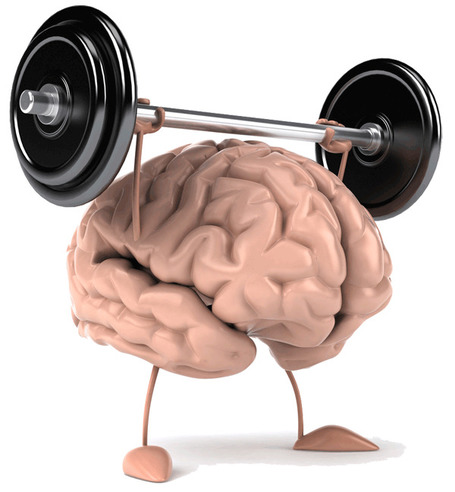
Enhancing Your Body with Your Mind

by Sepano Hassanzadeh

I have a confession to make. I've been wrong. Dead wrong. I thought I had it right, but I didn't.

You see, I've been focusing a lot on enhancing the Body. Train smart, eat smart...that kind of stuff. Yes it's solid advice and yes, it provides results. But I've been ignoring an underlying element: the Mind.

“Eat Well, Think Well, Move Well”

I first heard the above words uttered by a very knowledgeable chiropractor and right away I thought, “This guy's a genius. He has simplified health, fitness, and lifestyle success to six words!”

I adopted and practiced this philosophy and saw great results. But something was missing. I ate well. I trained well. But was I truly THINKING well? Up until recently the answer was a resounding no.

Okay, And Your Point Is?

My point is that it all begins with the Mind. If you hope to be successful in your health, fitness, and life goals, you must FIRST STRENGTHEN YOUR MIND. So how do you go about strengthening your mind?

Think of the Mind as the command center or central processing unit. It's the General, the King, the CEO.

Think of the Body as the physical organism. If this organism is the puppet, the Mind is the puppeteer. Hopefully you are starting to understand the roles, given all the awesome analogies I'm providing.

You should begin to realize that the stronger the Mind is, the more powerful the Body can be. The better the leader is, the better the company can and will be.

Strengthening Your Mind: The Unlimited Power of Thoughts

Remember that part about “thinking well”? Now we have arrived to it. Strengthening the Mind involves thinking POWERFUL and POSTIVE thoughts.

It is well-documented that our thoughts and beliefs actually affect our genes and how they are expressed within the organism. Genes are like blueprints for the Body. This gets into the field of Epigenetics and Energy Medicine on which books have been written. If you are interested in learning more, I highly recommend Bruce Lipton's The Biology of Belief.

The basic principle, however, is this: if you are constantly thinking about your strengths and looking at the positive in any situation, you will actually manifest those qualities. There will be no room for negative thoughts and therefore the positive thoughts which are dominant will begin to prodice higher energy, better mood, and greater motivation.

Feeding The Mind & Body: A Reward System for Success

Just as the Body requires nutrients to survive and thrive, the Mind also needs “food” to grow and function optimally. It starts to make sense when you find yourself with more food cravings during very stressful or frustrating times. This is the Mind telling you that it's starving and needs to be fed and rewarded.

Once you understand that both entities require daily nourishment, you can give yourself the proper rewards to live a healthy lifestyle and achieve the body you want, without going insane in the process.

Below I've listed some examples of food for the Mind and Body.

Mind Food Essentials

* Positive thoughts/empowering beliefs
* Top 3 favorite foods (what food can you not live without?)
* Social occasions (getting together with friends)
* Watching uplifting movies
* Reading thought provoking books
* Listening to inspiring music

Body Food Essentials

* Exercise (sports, weight-training, cardiovascular training)
* Nutrient-dense foods
* Certain supplements (fish oil, multivitamin, protein powder)

Important for Both

* Relaxation techniques (breathing, meditation, etc.)
* Yoga & other recovery exercise
* Massage
* Acupuncture
* Deep sleep
* Power naps

Wrap-up

As we can see, the Mind leads the Body and therefore should be strengthened in order to achieve a better and healthier body. Therefore, strengthening the Mind is just as important as, and should by no means be sacrificed for, strengthening the body.

To do this, we must “feed” the mind with powerful and positive thoughts along with mind-nourishing activities. In the end, it’s all about balance. We must nourish both our bodies and our minds each day.  An example is getting a good night’s sleep, and then making sure we read a book and exercising during the day.

If we can focus our efforts both of these areas, we can enhance our ability to achieve any goal we set our mind and body to. To the feast!


Thursday, August 16, 2012

Mind Your Liquids to Minimize Your Gut


If you have ever wondered if there was a simple way to be more healthy, I have good news for you! One of the easiest and most effective strategies for improving your health is to just change the liquids you put into your body. For some, this alone can create dramatic changes in body composition and overall well-being. So put down the diet coke, pick up your water bottle, and let’s run through how to best tackle liquids.


Water:

Water plays a pivotal role in optimizing health. If you do nothing else, simply drink more water to improve your health. To determine your optimal water consumption, follow this formula: body weight (lbs)/2 = oz. of water. So, if you weigh 150 lbs., your goal will be 75 oz. PER DAY. This means that most (if not all) of your liquid should be coming from water. Now it should be noted that this is a generality and people do vary in the amounts they need. Depending on what food you are eating and the amount of diuretics you drink, you may not need as much. That being said, having too much water is rarely a concern. If nothing else, just replacing your current beverages with water would be a great start. You can work to build a water routine so that you ensure success. This could include a glass or two every 3-4 hours. If you build it into your day, you are much more likely to meet your daily needs. 

If you want to be as fit as possible, water is just about all you should be drinking. Unsweetened tea (green tea being best) can also be a great addition, especially if you are trying to get off coffee. Other than these drinking, you are better off dropping the sports drinks (did you really sweat out all of the sodium in your body?), energy drinks, juices, and Crystal Light. 

Drink plain old water with a squeeze of lemon and you will be good to go.

Coffee:

Depending on how you respond to caffeine, coffee may be your best friend or your worst enemy. For those of you who find that coffee really makes you feel better (and have actually made the effort to NOT drink coffee at some point for comparison purposes), here are a few guidelines for how to use it most effectively.

1) If you have not tried it before, I highly recommend taking 2-4 weeks off coffee to see how you respond. If you actually feel better, maybe coffee is not the drink for you. 

2) If after 4 weeks, you are still not feeling great and coffee really makes you feel great, then get back into the habit. The good thing is that at this point, your tolerance should be lower so keep your intake to 1-2 cups in the morning. Afternoon/night coffee rarely results is anything positive.

3) If you need to add something, go with whole whipping cream. This will actually increase the absorption of the caffeine, so you may find that you do not need to drink as much.

4) Avoid sugar, artificial sweeteners, and creamers. This is where many people get into trouble, so take this seriously.

Alcohol:

While alcohol is not the healthiest beverage, you will probably continue to have your wine/beer/tequila regardless of its consequences. So, instead of telling you to avoid all alcohol, here are some tips for limiting the damage.

1) The less, the better (If you usually have 2 glasses of wine each night, try having 1. Or keep the 2 glasses, but only drink 2-3 nights a week).

2) Drink before dinner instead of afterwards. The more time you have between your last drink and the time you go to sleep, the better. Plus, you will feel it more, so you will not need as much!

3) For liquor, add lime/lemon & club soda. This will help you to avoid added sugar while also utilizing the acidity in the lime/lemon to blunt the usual insulin response. The club soda will increase the absorption of the alcohol, again meaning that you will not need as much. 

There are not many good reasons to consume other types of liquids than the ones mentioned, and if you decided that caffeine and alcohol are not for you, your body would very much appreciate your thoughtfulness. I also want to reiterate that “diet” drinks are not a healthy alternative, and should be limited as much as their full-sugar siblings.

Bottom line: stick to the water and start seeing and feeling the benefits today!

Wednesday, August 8, 2012

Eat That Frog!

When you woke up this morning, did you feel inspired and ready to take on the opportunities that awaited you or did you feel resistant to even get out of bed? It has been my experience that most people generally relate more to the latter statement than the first. But why is that? Each day we have the opportunity to move ourselves closer to exactly what we want out of life and yet we act as if we would prefer to just let our lives pass in front of us. Today, let’s talk about how to better situate yourself so that you find that energy each morning to get the most out of your day.

In a great book on time management, Brian Tracy talks about the importance of prioritizing and planning each day to allow yourself to get the most out of each day. Before we get into his advice, let me ask you this: do you have a plan when you wake up? I ask this because having a plan is the most fundamental step toward life fulfillment, yet most of us go through each day just trying to survive our to-do lists. Think about each day as if you were building a house. If you just start laying cement, putting up dry wall, and nailing pieces of work together with no thought-out plan, you will end up with a big mess. If, however, you lay out a plan for completing your project, you will know what to do and in what order to complete your task. Your day is the same way. If you leave it to chance, you will leave yourself frustrated, stressed, and without a feeling of accomplishment because all you leave yourself with is a mess of inconsistent and incomplete tasks. If you really want to take a positive step toward reaching your goals, you must put in some time to plan out your day!

We have talked before about the need to establish goals and create a plan, but the idea of the daily plan takes this to a whole new level. In Brian’s book, Eat That Frog!, he presses the importance of spending 10-15 minutes each day planning out all the things you need to get done. This could happen the night before or the morning of, as long as you take the time to think about what you need to get done. Your next task is to put those tasks in order of importance. What is the MOST IMPORTANT thing you can do to get closer to your goals? This will obviously depend on what your main goals are, so if you have not figured out your goals yet, go back and establish what it is you really want to accomplish.

Once you have your goals and you have your list of prioritized tasks, all that’s left to do is to take action! That means that the FIRST thing you do each day is your most important task. This is what Brian means when he calls on you to “eat that frog”! His point is this: if you have to eat a frog (or do something that you would not normally be inclined to do), you might as well get it over with and free up your mind for the rest of the day.

The idea is to get going on those things that will have the biggest impact on helping you to reach your goals. These are usually the actions that are hardest and on which we tend to procrastinate. If you commit to completing them first, however, they will not lingering over your head all day, potentially not being completed at all. If it’s a big task, maybe you break it up into multiple 1-2 hours chunks of work that you can get to over the next week. The idea is not that you will get everything done each day, it’s that you will make positive action each day and that you will get the most important of those actions done first!

The best part about this is that when you do complete a challenging, but highly important, task in the morning, it provides momentum for the rest of the day. You feel good about yourself, your progress, and your ability to take control. All by spending only 15 minutes a day! So tonight, plan to take that 15 minutes and write out all your tasks for the next day. Put them in order from most important to least important. Then schedule time on your calendar to complete those tasks. (Hint: You may have more tasks on your list than you have time for…that’s okay! Look at those tasks that were not your top priorities and start thinking about which ones you could delegate or eliminate. We often have a series of tasks that do very little for helping us to reach our goals or could easily be done by someone else. If so, set some time in your day to delegate what is appropriate and just eliminate the rest!)

Here’s to getting more done and reaching your goals faster!